Wednesday, February 27, 2008

Service Time

During the last couple of rides I've noticed that my RS Pikes were suffering from top-out clunk, especially noticeable after lowering the front a smidge via the U-Turn adjuster. A quick glance at the service log shows they've covered close to 1k miles and more than 100hrs - at which point the RS guide recommends the damping oil be changed. They're performed so consistently and been so reliable that I've become somewhat laxadazyickle about servicing 'em and not even completed the 50hr tasks :blush. I hope the top-out rattle is no more than a warning and not terminal - forum searches appear to suggest that a service will fix the annoying tappety-tap.


Toons has already Push'd his Pike and all the web speak suggested the revised Coloradian damping is well worth the extra £'s over a plain ol'service. Find blurb on the mod here. As it happens Chippy has offered to cover the upgrade as an early bday pressie, so I'm already onto a winner :-)


Whilst my front bouncer is away I figured it also makes sense to send off my Rp3 for a thorough overhaul. Rear shox's don't half take some abuse and previous experience shows that my rear shock has benefited more from a full service (incl'g seals, nitrogen?) over a plain ol'DIY air can relube. Besides which I'm now running long 5.5" rockers and would also like to discuss the original Push modification and possible adjustments now that I've plenty of miles on the unit.


The courier collected my bouncers this morning, so they're already on route to a damn good fettle...

Wednesday, December 12, 2007

More Travel Please

Earlier this week I popped apart the Reba on my Canyon and whipped out the 15mm spacer that now boosts the front travel to match the rear (115mm). The instructions suggest oil as an internal lube (compression side) but the factory seem to have used grease - so I'm hoping the re-assembled unit will perform even better than before.

I just swapped out my original 5Spot rockers for the new 5.5" units that adorn the latest California rigs. This has propped up the bottom bracket by half an inch to 13.75" and it'll be interesting to see how it rides now with the 140mm Pike up front (130mm is the recommended front bouncer). Climbing should improve and I'm keen to see how they cope with twisty and DH, Toons seems to like 'em after switchin' from his longer travel Push rockers. I'm also hopin' that the longer rockers will release a little extra travel from the Push'd RP3 that's been a little taught since applying the Colorado mod.

So I guess I've been on a quest to increase those all important inches :p

I've not test ridden since tweakin' but I'll report back as soon as, oh and post some pic's ;-)

Sunday, December 09, 2007

Push your Rockshox

TF Tuned Shox have just taken delivery of a new PUSH Factory tuning system for your Rockshox forks...

Check out the blurb here

A review on PinkBike. here

Thursday, July 19, 2007

5Spot Fork#3

After a short (too short) holiday it became crystal clear that my 5Spot has been hanging in the rafters for far too long. After wrestling with suppiers (a whole different story) I'm pleased to report that my Nixon induced lay-off is about to end and that my knobbiles will once again roll.

I'm in the process of hanging a beefy Rockshox up front with a hoop courtesy of our pet wheel-miester, Rob - thanks pal don't drink it all at once;) To be wielding a spanner that's creating rather than repairing something feels soooo much better, although I do intend to fix the Nixon later on. Although it initially gave me some bother it has managed to cover 2k miles+ so I've grown fond of it's oddities. Besides it'll be handy to have as a spare.
"Do you like me new tubeless setup !"

It's not all be plain sailing tho as I found I didn't have many headset spacers, whilst chopping down the steerer found it's made from a thick, resistant alloy and the chunky steerer also had me wrestlin' the star nut into position. I've never had any bother with these before but the narrow tube had it twisting to all sorts of dodgy angles. As the numerous bent bolts will testify. It's still not perfect but it'll do and one thing is certain, it ain't going anywhere !

So my 5Spot is to morph for a 3rd time, into a full on all-mountain/Dozer muchin' rig :lol For those suffering "concussion" (Sicknote) I also ran a shorter Pace bouncer which is now more appropriately mounted on Rob's slender Flux.

I don't suppose that my replacement will appeal to DDave's RS aversion but if he disappears to Alpine mud fests, leaving us to fend for ourselves, then crazy thangs are bound to happen :p

Thursday, June 28, 2007

Specialist Tool

Whilst I was on call last week (couldn't go too far far :( ) I decided to completely strip down my front bouncer to check the state of the compression/rebound/air cartridges. It didn't take long to pop off the lowers, drain the open bath oil before the compression and rebound assembles come out easily enough with standard tools. Depressing the shraeder valve I started to unwind the air cartridge with a 22mm spanner as Chipmunk came in to see how it was going. She'd no sooner got alongside when "BANG"! the cartridge fired itself across the work bench into the side of my toolbox :O Poor Chippy jumped so high I thought she'd paint the eve's whilst up there :p Anyhow, nothing was damaged although my partners heart rate took a while to calm down.

Cleaning and inspecting the exposed guts didn't reveal any nasty surprises, phew, so I started to reassemble when I hit problem#1. The IT (Manitou's air travel adjust system) was still installed in the left stanchion and if you looked up there a small 5mm tube was in the center. The air cartridge is fed into the stanchion and the IT rod should run up it's center. "Should" but didn't :( The teeny rod was off slightly center and no amount of fiddlin' and tweakin' could get the three components to align.

OK, I'll remove the IT unit...problem#2, which can't be removed with simple tools. Instead it needs a deep slotted socket to clear the gonzo cable feed. The appropriate gadget costs in the region of £40 :( Not willing to shell out such mula for such a low use item I identified a suitable socket, grabbed a grinder and 5mins later we had ourselves a specialist tool, for nowt :D 2mins later and the awkward lickle IT rod was removed.

With all the guts spilled I checked the condition of the seals, which didn't seem too bad at all. However, the service guide made a point of always replacing the "quad" seals associated with the IT system, so off I went for a t'interweb search. Problem#3 surfaced when my previously bookmarked spares pages didn't work and Google only showed spares in the USA. I even called TFTunedShox but Tim himself (not a fan of the IT system) didn't hold out any hope of acquiring spares due to the distributor and ownership changes with Manitou. Blast.

Oh well, I'd have to pop it all back and see if everything worked. With liberal amounts of MPrep lube, 7.5w suspension oil (compression/rebound), engine oil (open bath lube) and oil soaked foam rings the bouncer was back in one piece. 140psi was added equalising the IT chambers to get a consistent pressure and we were ready for a test ride. A short loop dicing with Chipmunk showed no obvious ill effects from my ham fistedness. Riding very nicely, plush with plenty of adjustment which may well have been down the oil level - 10mm too high and I've also used a heavier 7w instead of 5w. I did find the bouncer to be a little soft and checking the gauge confirmed a few psi loss. Closer inspection of the shrader valve showed it was bent and needed replacing, problem#4. Fixed with motor factors spares the Nixon was loaded with 140psi.

An overnight PSI check revealed a 20psi deficit and depressing the lever extended the fork back to full length - where I'd left the evening before :rolleyes The manual suggests that this negative creep is down to a defunct outer quad seal and spares are proving to be thin on the ground at the moment. A thread state side over on MTBR appears to have highlighted an suitable source of appropriate o-rings but the web page only lists bulk orders.

Chad has even phoned Manitou stateside for me but they're busy relocating between facilities so I either wait until the manufacturer is back online, source parts from elsewhere that may not fit or acquire another fork. Hmmm, I wonder...

Saturday, March 31, 2007

36 Bits

Following on from mrNixon's recent improvement, Dozer noticed that his 18 month old Fox 36 bruiser was perhaps a little sticky during our recent visit to Cannock. Although it wasn't notchy his Talas adjuster didn't seem to have it's full range of adjustment and as it's well overdue for a 12 month strip down and it's endured two British winters we decided it was time to treat the big brown bouncer.

After reviewing the owners manual and identifying that a strip down DIDN'T need any special tools we set to popping it apart. All that's required is to remove the two fixings at the base of the lowers, give 'em a tap and simply slide the lowers from the uppers. Have a drip tray handy though as the "open bath" lubing system should drain out once they're separated. In this case one leg seeped oil with the other offering up just a few drips. Wipe everything down making sure any nasty grit has been eradicated before you contemplate putting it back together. Pay particular attention to the wiper seals and foam rings. Sliding the lowers back on, stop just short of feeding the fixings back through so you can squirt the required amount of lube that constitutes the open bath. Nip everything back up, put it back on the bike before testing and setting up the compression/rebound which will most likely need a tweak. All in all, it'll probably take you about an hour the first time and half that once you're familiar with the routine.

From the pic you can see that I removed the fork from the bike but this isn't strictly necessary. I just prefer removing it as it's easier to view and clean everything plus I get an opportunity to check and clean the headset, stem, etc.

The benefits of a regular service schedule are many, not least a reliable and better ride but you'll also reduce the likelihood of an expensive repair bill. Your shock(s) are the most expensive components hanging from your rig, so look after 'em. Now winter is behind us (hopefully!) it's a great time to bet your bouncer back on form for a long summer of fast trails :p

Don't be put off servicing your own bouncer, all it takes is a little care and now the tinterweb has a host of useful guides to help you along. Here's just a couple to get you going; EnduroForkSeals, Fox.

But before you dive in, checkout your manufacturer's manual for the tools required, correct oil weights, volumes/heights, etc; Fox, Magura, Manitou, Marzocchi, Pace, Rockshox.

PS: I take no responsibility if after being "inspired" you go and bust yours !

Sunday, March 18, 2007

Moist and Squishy

Earlier this weekend, I popped open mrNixon and according to the instructions I should have drained 16cc from each leg but found just a few drops dribbled out. After a quick clean, he was re-assembled complete with plenty of 5-40w lube for his "open bath" lushness.

A couple of laps around Chicksands had a high tide mark over 3/4's up the stanchions and he once again tracks smoothly over the rough. I'll suspect the psi, compression and rebound will need a tweak now that we're moving freely. Thankfully the Welsh unpredictable notchy-ness is a thing of the past and it looks like we're ready for some pukka rocky action at 7Stanes :p

I need to re-read the manual as I may be able to pop apart the damping and/or rebound circuits which also rely on a little lube for schweet, buttery smoothness. Although I recall that at least one of 'em needs a special gizmo to access the internals :(

I thunk he was last serviced some 18 months ago so it seems that a more regular spannerin' schedule would have prevented my recent Welsh wrestling match. So don't let a notchy bouncer ruin your looming northern trip, go get lubed up and treat your rig to a quick fettle.

Thursday, September 14, 2006

RP3 PUSH'd

TF Tuned Shox have now returned my RP3, having been overhauled and tweaked. As I'd been away from my beloved knobblies for some 10 days, I was mighty keen to get my 5Spot rolling again last night. But whilst my camelbak was thawing, I opened the package and read the TFT service report.

Tweakin;
TFT had called me prior to the service and their initial tests showed that my 18 month old, 2k mile'd was working normally - encouraging for anyone else running a stock RP3. I recounted the problem experienced in the Peaks, which I bike ride, my riding "style", typical terrain and riding weight.

He then quiz'd me about any specific changes I wanted. Since the riding rough Peaks terrain, I feel that my 5Spot feels too soggy at the "sag" point. It feels too hard overall if I add a little more air to jack her up a little. On my local cross country terrain the RP3 works fine, although the Pro-Pedal does seem to still allow some pedal induced bob.

Neil offered to re-valve or better still add the PUSH assembly which would then give him more options to fine tune the shock. From browsing tinterweb I hadn't realized that these suspension guru's could adjust the mid stroke as well as the compression and rebound. Specifically, The PUSH mod allows them a choice of 4 to 5 options ranging from soft to xtra firm in each area. Gulp. With so many choices I pretty much left it to him to identify which option would suit - they have loads of experience listening to dodgy, illiterate MTBers like me and interpreting what they really want. I think he pretty much selected the middle options with perhaps a firmer mid-stroke.

So what'd they do to my ol'RP3 ?

  • Stripped, cleaned and reassembled '05 RP3
  • Full service
  • Fitted PUSH platform damping upgrade kit
  • Dyno tested shock operation
  • Static water-tested shock for air leaks
Parts fitted...
  • PUSH platform damping upgrade kit
  • Air can seal kit
  • Oil damper seal kit
Much to my surprise, all the displaced parts were returned for my inspection. How brilliant is that, it proves that they're talking straight ;) They included some Fox lube and even replacement DU bushes, after noting that the original bushes are still fine. Oh and you also get a new "logo" sticker :rolleyes

The service sheet also highlights that adjustments can be made to the PUSH kit if the initial configuration is not to your liking. Promptly and free of charge, me likee :p

Recommended set-up;
  • Positive pressure to 210psi (which may need re-setting to get correct sag)
  • Rebound will need adjusting
210psi ! Gulp. I'd found that running my stock RP3 at approx 160psi gave me almost full travel locally and wouldn't bottom out on the occasional Welsh drop. At this pressure the ride was still acceptable albeit a little wallowy. 160psi is approx 90% of my body weight (lbs) - a rough gauge for a 5Spot. So TFT's recommendation of 210psi flips this rule to 120% body weight :o At this higher psi, a quick sag check showed around 12mm of the 55mm shaft, around 20% which is pretty good for general trail riding.

Initial Ride impressions; Cranking a straight forward xc route, my immediate thoughts are how taught the rear now feels. Sure, the stock RP3 could be made firmer but then even the smallest ripples would crash and skip by underneath you, let alone riding over roots or babyheads. Not so with the PUSH mod - even tho I'm running waaay more psi the rear is taught and firm but not harsh over the bumps.

The rebound adjuster didn't seem to make much difference and consequently wasn't tweaked too much.

The Pro-Pedal appeared to be working (looking down at the cable movement) but seems to be much softer between settings than the stock RP3. As the different settings don't seem as pronounced, I suspect that I need to adjust to the operation of the revised damper before I can feel any differences - much like familiarising myself with the action of the stock RP3 last year.

Summary
; :thumbu Although it's still early to make a complete assessment, I can tell ya's that tuning really does make a huge difference. The less soggy feel makes the bike feel much tighter and quicker yet it rides the terrain with so much more composure. I also have my digits crossed that running less sag will improve climbing ability and help nail my long fork to the trail.

The peeps at TFT are down to earth, helpful, prompt and definitely know their stuff. Their prices aren't high compared to the competition either. PUSH are the dogs, 'nuff said.

I'll update this post when I've completed a few more hours testing.

What's Next ?
  • Sag; when loaded up with riding gear
  • Rebound; more testing required
  • Varied terrain; get over to a rooty Woburn and hammer it !
  • Experiment with lower psi

Monday, September 11, 2006

RP3 Tease

That MrFlooks...he's a joker. Why? Last Thursday I posted my RP3 to TFT for a tweak.

Over the wkend the Royal Snail website indicates that the parcel was delivered = good. But offered no confirmation = bad. Their site lists numerous links to "lost parcels" and more worringly "it says delivered, but isn't". Now I begin to seriously regret not using a courier :x

After a wkend bereft of knobblies, I'm eager to confirm that that the "fast factory fettlers" actually have my bouncer. So I make a quick call...after some paper shuffling, list checking and odd grumblings from s.Wales - their system says it isn't there :o

Gulp. My pulse quickened, my blood surged, stories of lost parcels and lengthy claims flash by... Just as I'm thanking MrF and preparing myself for the Royal merry-go-round, he calmly mentions that it's on the shelf !

Ho-ho, nice one :D :x

Tuesday, April 11, 2006

DDave at local woods - testing the DHX

After having put the lovely TI adorned bouncy thing on the back of my gemini, I was keen to get out and see how it performed... The ride convinced me that the DHX coil is the daddy of all "platform" rear shocks. It felt much more lively and generally more capable of dealing with what ever I threw at it. Found a new run I hadn't seen before which has got a mint table, then a long double and really sharp left hander that I got some big drift on before snapping back into line for the right hander, bang, bang, bang over the roots, hop the stump and throw the back wheel into the other stump to rebound off it to get loads of speed for the corner.... have it! I excelled myself in my dangerous ways by overshooting a table top by a good 6feet and landing on the upslope, and managing to keep enough speed to launch the gap into the bombhole....

Posse: DDave and DDave's missus.

Mechanicals: I pumped my tubeless tyre at the front to 80psi the night before to seat it properly, I forgot about this on my first run, so when I got to the top, I let some out, which promptly dumped 70 psi out of it... which made jumps, corners and getting speed up in a straight line, VERY interesting.


Also made the 5mile ride home on it HELL!

Monday, April 10, 2006

Fox DHX 5.0 Coil

FOX DHX 5.0 Coil verses Manipoo 6way Coil

A few years ago, rear shock choice wouldn't have been much of a big deal, you'd just be happy with whatever the frame came with, and assume that was probably the best and not really worry about it. And it was probably a FOX too. At the moment, just about every frame manufacturer offers you a choice of rear shock, and it all can get a bit baffling, as it's easy to spend a lot of time and effort looking at shiney forks with spangly knobs on, but's all to easy to forget that little air can or spring that's hidden under a mass of cnc'ing and linkages..... So I thought I'd post a review about my new rear shock for my rock munchin' Gemini DH frame....

Even though the Manitou had more adjustments, I prefer the method of adjustments on the Fox, as they were all done easily by turning big dials (all clearly colour coded :- blue for compression/preload adjustments red for rebound) and a 4mm allen key for that big bottom out adjuster around the air valve.

RIDING THE NEW DHX: After having a brief bounce on it to get preload just about right, and set rebound to what I think felt ok, I was off down badby (my local woods which has a few short DH runs) to get a feel for it and set it up how I like.

I fiddled with pro pedal and added a bit of bottom out just cos I will prob need it for bigger courses. I wound the propedal off for Badby but it's pretty sweet I can just dial it up for more pedally courses if I really want, rather than having to get out the shock pump and stick a load of air in.

It's also nice to be able to make the bottom out adjustment with just a 4mm allen key not having to hope someone has a 16mm socket. (By the way, anybody with a Manitou Fork/Shock with SPV who has the air valve, then a red hex shaped bit, then another one that is the top cap, the red bit is your bottom out adjuster, worth playing with if you intend on getting any kind of air).

Further testing here.

VERDICT: The DHX is a massive improvement on the Manitou 6way, and from all reports is a reliable unit. Gets the thumbs up from me. It's
also available in an air platform too, for those who watch the grams, but with a TI spring, the coil is very, very light at only 1.1lbs, compared to the 2.4lbs of the Manitou with a steel spring.

The 6way is a highly adjustable shock but let down by poor reliability and fiddly adjustments.

Friday, March 10, 2006

2006 Marzocchi Z.1 Freeride SL RC2

After having more problems than I could shake a stick at with my Manitou Shermans, I decided it was time to ditch the crappy things and get a fork I can depend on and not have to service after every ride to keep them from seizing up. Having thoroughly lost confidence in Manitou since I’ve managed to blow the Swinger 6way on my Gemini as well, I felt it was time for a visit back to the good old big “M” that have served me so well in the past.

The 2006 Z.1 Freeride Sl is the top end “light” version of the infamous Z.1 range. Only one sits above this in the price range, and that is the Z.1 Light (coil sprung version). Unfortunately this only comes in a 150mm flavour, and I don’t think I’m good enough yet to be giving my fork written notice of an upcoming corner while trying to stay on the bike, so I opted for these as they have a 130mm option.

Adjustability
: Doppio Air, Rebound, Compression, Progressiveness, Travel
Preload : 2x Positive low pressure air chambers (one each side)

Travel Adjust : 130mm-150mm via different pressure in the negative chamber
Rebound : Indexed dial on top of fork
Compression : Lovely revolver style indexed dial at the bottom of the fork
PAR : Progressive Air Resistance for bottom of stroke ramp up adjustment

External Business :
32mm Alloy slick coated, tapered stanchions, Forged “FR” crown, Mg “Monolite”, 20mm lowers, all Alloy adjusters.

I’ve always felt that Marzocchi have been quite quiet on what their forks can actually do, but when you look into them, they’ve been doing travel adjusters, and many other useful features long before other manufacturers. Things like ETA and the new TST, all designed to be easy and require the least amount of faffing about twiddling dials possible, and this is a philosophy carried through all of the Marzocchi forks. No winding of Uturns, or any other such business, just flip on and off. Sadly, this fork doesn’t have these, but it’s a small price to pay.

The fork is quite light for the fact that it is a 150mm travel fork, especially for a Marzocchi. I weighed mine in at 4.6lbs before I cut the steerer down.

It certainly looks the part, with big black 32mm tapered stanchions, burly crown, and beefy lowers attached to 20mm dedicated dropouts.

Preload and travel are set by air pressure. Since the fork uses the “DOPPIO” system, the pressures for preload have always been quite low. An adapter to use with all of the marzocchi valves is provided, but no pump. Which is a shame, because you really need 2 pumps to set these forks up; the travel adjuster uses high pressures, and trying to set the preload with a high pressure is an exercise in futility. About 2psi can make a big difference, and trying to add just 2psi with a high-pressure pump, is er, interesting!

Setting the travel is also difficult to get used to, basically there is a negative chamber that the more air you put in, the more it pulls the forks down. Pumping them up can be confusing at first, but if you put a couple of strokes in, then compress the fork, you can see what travel you’ve got.

Rebound and compression adjustments work really well, with a noticable difference between each click on the adjuster. Watch out for the bolt on the compression adjuster though, mine fell off; it seems Marz don’t do them up very tight when they leave the factory. I’ve since nipped it up and it’s stayed on through a muddy, bumpy ride at Cannock, so it seems to be ok now. Something I will be checking every now and then.

So, how does these badboys perform? Amazing. They’ve done it again, put DH suspension technology into a tough little nut of a fork. What I mean by this is: with a lot of XC forks, you will find they are plenty happy rebounding fast over little quick bumps, but rebound as fast as a fast thing off a jump, or drop. This can obviously be an issue if the landing is sketchy! The last thing you want is to be wrestling a fork that has just sprung back at you at MACH3. Top end DH forks strive to get a balance of both: supple and fast at the start of the stroke to take out the roots and braking bumps, and then choke it when you go off a big jump/drop. These badboys manage this, I’ve found a rebound setting that makes supple as a soft nipple over small, stuttery bumps, but I didn’t have to change it when I went for a jump/DH session, handled flowing doubles, bombholes and rooty corners with ease. The black coating is one of the smoothest I’ve felt ever too, which really goes along way to making these very smooth strokers indeed.

I’ve found the PAR very useful as well, and one of the reasons I bought them. You can set this at 0psi and have the fork completely linear, or pump as much air up to around 100psi to make the fork ramp up real nice. So basically, you’ve got a fork that: zips nicely over all the roots, doesn’t dive away from you suddenly when you hit something big, and doesn’t rebound like a pogo when you go of said big thing.

I just love this fork to bits! I was trying to stick into silly places on my ride at Cannock (March 9th), and it didn’t faulter once, and the incredible steerering offered by it’s burly crown and 20mm dropouts really allowed me to put the wheel exactly where I wanted it. Having tried just about every fork out there, and found it a compromise for about 60% of the stuff I do, this is finally the one I’ve been looking for, also works better than others I’ve tried too!

Bottom Line : Ok, you get to the bit you really want to read after all of that stuff up there!

I just love this fork to bits! I was trying to stick into silly places on my ride at Cannock (March 9th), and it didn’t faulter once, amd the incredible steerering offered by it’s burly crown and 20mm dropouts really allowed me to put the wheel exactly where I wanted it. Having tried just about every fork out there, and found it a compromise for about 60% of the stuff I do, this is finally the one I’ve been looking for, also works better than others I’ve tried too!

This fork is perfect if you want something that really can do it all, whilst not being a tank of a fork. It's a bit of a faff to set up, and a shock pump would be nice, especially for the price, but most of you probably have one already anyway. It's equally at home on a long travel full bounce, or a mid travel hardcore hardtail, Marzocchi have come up trumps, again. The only thing I wouldn’t mind having on this fork is a lockout or lock down feature, as it can get a little bouncy when the compression adjuster is wound full off. I’ve found a couple of turns of this sorts it out though.

Go on! Be a DH’er today!!!!!!

Tuesday, February 21, 2006

Rockshox Revelation 426 Uturn

Rockshox Revelation is the bigger brother of their very popular Reba fork and little brother to the Pike. I bought this fork as a stop gap for my Turner Flux and ultimately to fit to my Jekyll. Little did I know what a great fork I would get.

The 426 Uturn is just about 4lbs, with external floodgate, compression, rebound and 100-130mm U turn travel control. Both positive and negative airsprings are provided.

The U turn height control enables me to find a balance for different terrain, higher gives a more vague laid back feel, lower more direct and accurate. My Flux really likes it at 115mm for singletrack.

The travel adjust makes no difference to the spring, it remains linear and does not ramp up when lowered so the bike feels the same just lower and more direct.

The Airspring requires only low pressure, I run just 7-9bar +ve and 6-7bar -ve (12st 6lbs rider) this implies good reliability in the airsrping seals and so far there has been no softening at all in the first 150miles of hefty XC use.

The compression control and external floodgate are easy to use on the fly helping to get the fork right for both my weight and riding style. Rebound control is plentiful but just like Reba has a rather on/off character in the adjuster.

This fork is amazing for the money RRP £350, whilst it's not that plush it is easy to get accurately tailored performance as you ride that leads to great handling.

My only criticism's would be a tendency to dive on heavy landing and the brace is just too close to the wheel for our gloopy conditions. Perhaps some would consider it's rather direct connection to the ground a disadvantage, personally I don't but if you're looking for a jiggle free cockpit perhaps a Nixon would suit better.

I thoroughly recommend this fork to anyone wanting a strong tough reliable usable light fork for XC and All Mountain riding. The free RS shock pump included in the box was a sweetener much appreciated.

Supplied by Cyclesurgery.com, West End Lane, London

Thursday, December 29, 2005

Pace RC41

As my Nixon Super initially had a few teething problems, I decided to get my 5Spot a backup and alternative front bouncer, enter the Pace RC41. I selected this beauty as it's very light (3.5lbs), air sprung / flexible, has a climbing knock-down and looks very trick with it's exposed carbon weave. I also thought that it's 130mm of travel and ideal a-c for the 5Spot would be a good to comparison with the slightly longer Nixon. It'd potentially give me a more flexible steed for different rides and conditions, not that I was keen to keep swapping the forks around too often.

The only flaw in acquiring the Pace was that it's front brake used an IS (international standard) mount whereas the Nixon uses a Hayes/post style, which matched my front calliper. I therefore acquired a new Mono M4 caliper with the fork but then subsequently scored a complete front brake, 2nd hand from the Singletrack classifieds. The complete system made the process of swapping forks very quick and easy so the spare caliper was passed on.

In use the RC41 is nicely adjustable with external compression and rebound, the latter of which is easily accessible whilst riding at the top of the right fork leg. Which also houses the knock-down climbing aid which reduces the front travel by approximately 2 inches. This can either be cancelled manually or by setting a blow-off threshold which'll automatically extend the fork on a big hit lest you forget on the way back down.

Possibly the most noticeable difference with this fork is just how light the front of the bike becomes and I found it very easy to loft the front wheel over obstacles.

Pace market the RC41 with a "linear air spring" which I'm mightily impressed with. During deep compressions the spring rate doesn't increase during it's travel like a spring or other air forks and it gives a lovely bottomless feel. The flipside is that it then requires a different technique to loft off ledges as you can't "load" the front as much beforehand. It's no bigee though as the overall performance is very good.

Steering stiffness is certainly on a par with the Nixon and it's slightly shorter travel means my 5Spot becomes a very, very nimble machine. It'll change direction in a heartbeat and makes tight, technical singletrack a delight once you've dialed in your lightning quick reactions. Ironically, the quick steering has made me realise that I prefer the slightly more laid back feel of the Nixon so unfortunately I'll be passed the Pace on. I'll be sad to see it go but rest assured that it'll be going to a good home...

Wednesday, December 28, 2005

Nixon Super

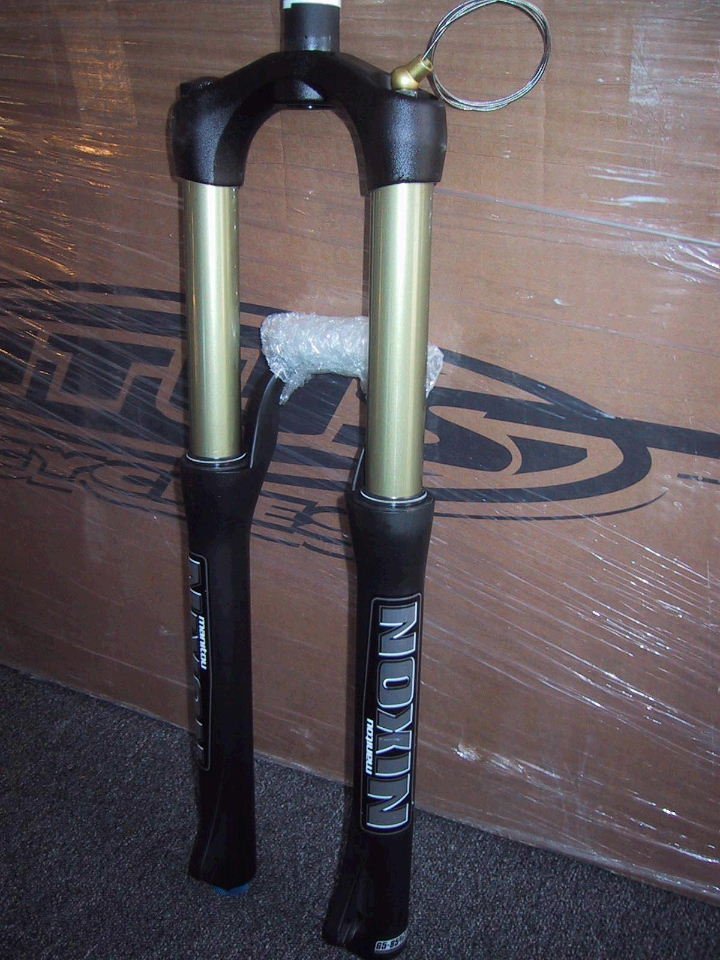
Why? Whilst investigating my 5Spot purchase, I wanted the bike to be as flexible as possible with a particular emphasis on nailing down the front on steep climbs. Many fork manufacturers offer climbing aids to lower the front a little but many of the early incarnations also caused the spring rate to ramp up, making the fork stiffer. Marzocchi were an obvious starting point with either ETA system but the axle to crown heights were too long for the frame (a-c lengths are lower for '06 and now inline with other manufacturer's). They were also a little heavy at close to 5lbs. Partly to keep the weight down, I wanted to try and air fork as the seals were now more durable and the bouncer would be more tune-able as a result. As I really liked the feel of my Manitou Black, I thought that their Nixon Super might be suitable as it uses the same buttery smooth TPC damping system. It also employs a new snazzy bar mounted, infinte travel (IT) adjust system which is theory meant I could run it shorter on climbs, near the 5Spot recommended 130mm on the level and open it right up on the descents. I opted to stay away from the toublesome Platinum model as the SPV and IT systems seemed to be causing many recall issues. An order was duly placed with Chad at RedBarnBicycles, who'd also been impressed with the same fork as fitted to his El'Salty. Chad also suggested that I opt for the lighter quick release version rather than using a bolt through front hub as he thought the 32mm diameter stanchions were plenty strong enough.

Adjustments. The compression, rebound and travel are all externally adjustable and make a marked difference to the ride, although some indents would be handy. All the adjusters are metal and hopefully more durable than the naff plastic items found elsewhere.

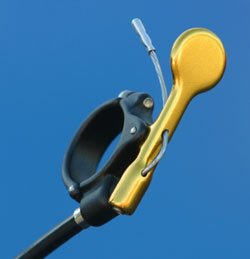
The IT system is so quick and easy to use with the fingertip adjuster next to the shifter on the handlebar. Depress the "spoon" and it'll gradually sinks through it's travel. Releasing, holds it at the selected length. This is handy on the steeper climbs and really helps to nail the front end down and virtually elimates the front wheel lifting and wandering. Lowering the travel does mean that you're more likely to whack a pedal on rocks, etc though, so I'd suggest using it sparingly. To extend the fork you depress the bar mounted "spoon" again and pop a little wheelie. It takes some practice to extend the fork on the move but it's easily achieved whilst you're stopped, gasping for air, at the top of the climb! The beauty of this travel adjust system is that the spring rate doesn't increase as you lower the fork, which means it's still supple / fluid over bumps and feels consistent.

Issues. When I initially bolted the fork onto the frame I noticed that I was only getting 1/3rd of the travel. Chad hadn't experienced this but contact the manufacturer on my behalf. Whilst I was waiting, the techy guy was out of the office at a show, I contacted the Raw (UK importer) who suggested that I send it directly to them for a fettle. They reviewed the problem and found the rebound assembly was busted and it also had misaligned lower legs. These were promptly replaced under warrantly and returned for just the cost of postage, a result. Back on the 5Spot it felt sweet and even while the fork bedding in I was impressed by how supple it felt over the smaller bumps and ripples. Over the next few months it got a pounding around Afan and Cannock without any further problems. In the autumn I wondered if I was inadvertantly catching the "spoon" with my thicker gloves on as I thought the fork was lower than I'd set during a couple of rides. So I moved the "spoon" inboard and continued on my ride. After hammering down a section of trail and at the bottom of the descent I lofted the front end over the log and found the front of the bike disappear over the other side, duly dumping me over the bars. Dozer found this particuarly funny as I'd only just commented on the "easy log hop"! I found the fork had mysteriously reduced to it's minimum travel (40mm) which was some 100mm/4"s shorter than expected... during the rest of the ride, the fork repeatedly sank through it's travel, unassisted. Another email to Raw suggested that I again return the fork as the travel adjust assembly had recently been modified and that they'd install a new unit. Whilst in for repair they also noticed some stanchion scoring (within the lowers) due to a tolerance issue - which necessitated a new set of uppers including the crown and steerer. Therefore, during both visits to Raw, my Nixon had not only been rebuilt twice but almost all the parts had now been replaced. It's subsequently back on my bike and we haven't had any problems so lets hope that all the niggles have now been resolved. We've not yet clocked up the longest runtime before the earlier problems occured, but we are getting closer...

Alongside the Nixon, I've periodically fitted the shorter Pace RC41 to my 5Spot which noticeably quickened the steering. However, I always find that I enjoy the slightly more laid back angles the Nixon gives.

Conclusion. Externally, the fork is well made, of a sturdy construction and not excessively heavy (4.1lbs) for the travel it offers (145mm). Internally, we've had a few negative experiences which I hope are now behind us with the modified components. In function, the positive air spring, compression and rebound adjusters alter the ride much as you'd expect. The TPC damping is as good as ever and really shines over the Marzocchi or Fox forks that I've tried. It also gives the Pace a run for it's money. The IT system is a handy feature to have, even though I've found that the 5Spot climbs well even with the fork extended.

Apart from Rockshox, I find the latest retail price of forks to be excessive and the price of the Nixon is no exception. However, if you can find any discounted I'd say that it'll be worth giving them a try.

I'd like to take this opportunity to thank Raw, who have been very helpful, professional and quick to turn around any faults.

For 2006, I notice that Manitou have revised their Nixon range and the Super is no longer available - boo. I suspect that this is due to their new "instrinsic" damping and compression cartridge (SPV evolve plus!) which may mean they've now optomised their Stable Platform Valve to also be supple over the small bumps. If they have then this could be a killer fork. I also hope that by simplifying the range, they'll reduce the number of recalls...

Tuesday, December 27, 2005

Fox RP3

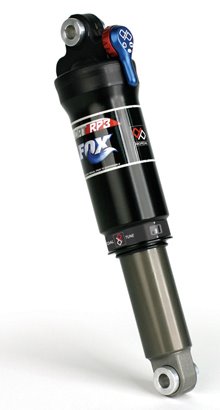
The Fox Float RP3 is an evolution of the trusty ol'Float which both I and Chipmunk ran happily for three years without any problems on our trusty ol'Marin's. The RP3 came as part of my Turner 5Spot frameset and I was keen to compare just how the much technology was loaded into the new unit. The new bouncer not only packs more of a punch but it's lighter at around the 200g mark compared to the Float's 250g-ish. Both the old and new can's are air sprung with a useful range of rebound control as standard. However, the new contender has an additional pro-pedal lever (blue) mounted over the rebound adjuster (red). The 3 position lever subtly alters the ride by employing minimal, medium or high levels of pro-pedal. Neither have a lockout that would put pressure on your frame and linkages.

The accompanying Fox literature waffles on about cancelling rider induced bob whilst still remaining active whilst offroad. Although it took me a few rides to become accustomed to the handling of my new rig, when repeatedly riding over small roots the three settings do markedly alter the ride. Now that I've plenty more miles on the RP3, I find that it typically stays in the middle position for the majority of the terrain. I'll flip it to maximum on asphalt, especially climbs which tightens the handling and only drop it to the softer minimum setting on rough descents or over particularly rutted terrain. The control over traction it offers it quite amazing and it would have been very interesting to compare the RP3 in our ol'Marin Tara's - which housed the Float.

I've found it be a reliable, no fuss system that's handy to have during rides and it's also very easy to setup. Simply add psi to dial in sag and fine tuning from there over the next few rides to ensure that you're using all available travel whilst in the rough, while not bottoming out. There are no negative chambers to balance, bottom out, high or low speed adjusters to complicate setup and straight out out of the box it's performed perfectly. Period, home servicing of the air can is so easy, well worth doing to prevent problems and hasn't altered since the original. Regular regreasing on our ol'Floats saw it well passed 3,500 miles without even a new set of seals.

Once my RP3 falls out of warranty I'll be looking towards getting the unit Push'd, which should improve the ride further. If that's possible...

Thursday, September 01, 2005

TF Tuning report

Dan goes Push'd
Intrepid reporter tries out a Fox Float R with TF Tuned Shox PUSH technology

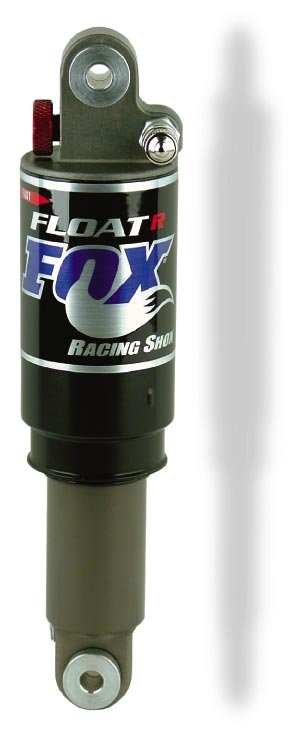
After trying out Farq's Turner around Cannock Chase, I thought it was about time I tried to retro-fit some sort of pro-pedal damping to my Marin Rock Springs. The suggestion from Mr.F was to take a look at TF Tuned Shox near Bath, so I promptly ripped the Fox Float R out of the Marin, booked it in, packaged it up and sent it off.

The service from TFT involves them fitting what they call their PUSH technology into your existing shock housing. Provided it's in sound basic shape, they fully rebuild the unit with new seals and bushes and give it a thorough checking over (and fit the PUSH bits, of course, which I'm assuming are just some clever valving components).

The service is tailored to you - your riding style, your weight, your bike - all entered on a form which you post off with your shock. They turn it around in double-quick time and I was amazed to find it back in my hands mid-day Wednesday (after a Monday posting). It was back in the frame even quicker :)

First impressions were that it just felt like someone had put way too much pressure in it, and it was just very firm. Without any serious trails, I resorted to testing in the back garden. I reset the shock's cock ring and gently rode around, riding 'properly'. The bike felt firmer and more in control at the rear, but not uncomfortably so, hinting that the shock was doing it's work effectively - a check on the cock ring showed there was indeed plenty of travel, but it simply wasn't registering on my bum. So that's good then, I thought.

The "PUSH" effect (reduction of rider inputs) was harder to test and is more down to rider feedback. I tried some wally riding (standing up on the pedals and hammering away like a nutball) and naturally there was no chance of the shock ironing all that out; but it did feel better. The test, however, is rather pointless because I never ride like that anyway.

I did a gentle ride over flat ground versus a hard pedalling ride (staying in seat and riding properly) and there seemed very little difference in the travel used up on the shock, which would seem to be a rather unscientific way of proving that the PUSH damping was working. If not, the heavy effort would have shown more travel on the shock. Hey, I'm no John Whyte but that's the best I can come up with.

The PUSH upgrade itself costs £45 and most of the time the guys will only undertake the work as part of a full service (£75) - this I had done at the same time anyway, so the total bill came to £120. It seems a little steep but the PUSH-aspect itself is worth the money. If your shock is in perfect condition, the service wouldn't be necessary ofcourse.

All in all, money well spent if you have a bike with a non-PPD shock. Who needs Horst linkages (clearly Turner don't!). TFT's service is impeccable, quality of work is excellent and turn-around most impressive. Go on; push the boat out ....

Tuesday, February 01, 2005

Reviews

As many a Blog has been created that review all thangs MTB, I thought it'd be handy to have a central area where they can all be found, incl'g a handy link on the sidebar. So Blog away Posse and review kit to your hearts content...

Bikes :
Components :

Bars :
  • FSA XC190 - riser, alloy
  • Maxm MX-1 - flat, carbon
  • Maxm MX-5 - riser, carbon
Brakes :
  • Formula Oro
  • Hope C2 - 2 pot, closed
  • Hope Mini
  • Hope Mono M4 - 4 pot, open
  • Magura Louise BAT's, VentiRotors '07
  • Shimano Dual Control '05
  • Shimano Saint
Cables :
Cassettes :
  • Shimano XT
  • SRAM PG-990
  • SunRace MZ
Cranksets :
Derailleurs :
  • Shimano XTR (fd)
  • SRAM X-Gen (fd)
  • Shimano XTR (rd)
  • SRAM X0 (rd)
  • SRAM X9 (rd)
  • SRAM x9 Jockey Wheels '05
Forks :
Grips :
  • Enduro Fork Seals Silicone
  • Yeti Hardcore
Groupsets :
Pedals : Saddles :
  • Fizik Gobi '05
  • Koobi
  • Specialized BG2
  • Specialized Jett - women's
  • WTB Shadow
Seatclamps :
  • Hope
  • Salsa
Seatposts :
Shifters :
  • Shimano XT
  • SRAM x0
  • SRAM X9
Shoxs :
Skewers :
  • Bontrager
  • Hope
Stems :
Tyres :
  • Bontrager ACX '05 "Tubeless"
  • Hutchinson Bulldog
  • Hutchinson Spider UST
  • Panaracer Cinder
  • Panaracer XC Fire
  • Schwalbe Nobby Nic's
  • Schwalbe Racing Ralph '05
Wheelsets : Accessories :

Armour :
Helmets :
Hydration Packs :
Jackets :
Lights : Locks :
GPS :
Mudguards :
Pumps :
Shoes :
Miscellaneous : Review Websites :
I find that the Blogger Archive drop-down is useless unless you know "when" stuff was Blog'd. So with a little help, I'm sure that the links to any new reviews will mysteriously find there way into this handy reference blog. Eventually...